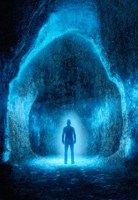
Perhaps the way out is not to escape the cave, but to cease being its prisoner by learning to distinguish the alien fire from the inner light. This is a painful, but the only path to tasting reality again — bitter, raw, and truly our own.
Книги #essay
Найдено 10 книг
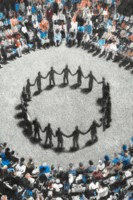
Do you know that poignant state between sleep and wakefulness, when the space behind closed eyelids feels more authentic than the morning light outside the window? When your skin still holds the memory of the Himalayan wind, and your nostrils carry the dust and saffron from the markets of Varanasi? What if these fleeting worlds are not just dreams, but a curtain slightly drawn back, a hint that our lives are performed simultaneously on many stages?
The ancients called this "Lila" — a play where you are not merely an actor dutifully reciting a part. You are both the light that trembles with your every move and the shadows cast by the will of this light. You are the very space where it all unfolds. At a certain moment, the need to choose between the role and your self disappears — all that remains is an astonished soaring in a space where the observer and the observed finally recognize each other.
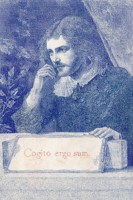
What remains when the entire universe collapses? Only thought. "I think, therefore I am" — this phrase by Descartes became not only a point of reference but also a verdict, forever imprisoning Western man in the solitary confinement of his own consciousness. Where is the proof that the external world is real? That other people are not merely convincing puppets in the dream of our lonely mind? This text is a journey into the heart of the most agonizing mystery of our existence. From Descartes' stove to Kafka's nightmares, from the gaze of the Other in Sartre to the abyss in the eyes of a stranger on the subway, from the digital ghosts of social networks to the temptation of an artificial interlocutor. This is the story of how the tragedy of solitude gives birth to music, love, and a great, quiet courage — the courage to believe in the reality of the other.

"We are like astronauts, forever stranded in orbit, who, having relinquished all hope of returning to Earth, begin to perceive the icy, lifeless splendor of the starry sky as their new home. And in this acceptance lies a certain, bitter freedom."
A child draws the sun as a circle with rays. A scientist sees it as a raging thermonuclear inferno. Where does true reality reside? This is a journey from Husserl's phenomenology to Baudrillard's simulacra, from Plato's cave to the server racks of social networks. An essay on how we learned to live in a labyrinth with no exit, and why, knowing it to be a simulation, we still persist in drawing a warm sun. Perhaps this very gesture constitutes the last bastion of the human.
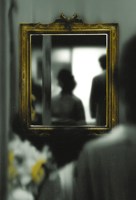
Newton's clockwork mechanism has ground to a halt. It has been supplanted by a Universe woven from quantum probabilities, where matter is executable code and reality is rendered on demand.
This essay is a guide beyond the confines of conventional physics, into a realm where the principle of "It from Bit" acquires digital flesh. Here, superposition is a state of lazy loading, and the past is a database that the system optimizes in real-time.
Within this paradigm, your consciousness is not a passive observer but a quantum tuner. The very act of your attention becomes a system call, compelling reality to make a choice. You are no longer a reader of the great Book of Creation — you are its co-author, whose gaze translates silent potential into a single version of existence.
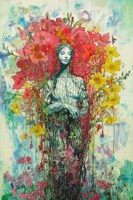
This essay explores the phenomenon of 3D printing not as a technological tool, but as a new cultural and philosophical code, redefining the bond between idea and matter. From its historical origins and key inventions to its fusion with artificial intelligence and its transformative impact on medicine, construction, and space exploration, the author traces the journey of additive manufacturing toward its status as a "materializer" — erasing the final boundary between the digital and the physical. The concluding part paints a picture of a future defined by deep customization, radical efficiency, and a new kind of responsibility, offering a view of the technology as a silent revolution that is changing the very way we interact with reality.
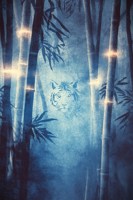
This essay draws a parallel between the Melanesian cargo cults and contemporary digital practices. Through the metaphor of bamboo towers and ritual gestures, it explores how the opacity of algorithms, the simulative nature of interfaces, and the need for social validation give rise to a new form of collective ritual. The text examines manifestations of this “cult” — from the pursuit of engagement on social networks to corporate jargon, education, and the crypto industry — and proposes a reflexive optic for understanding the digital environment without resorting to magical thinking.
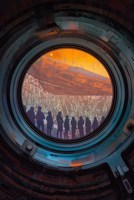
Why do some science fiction writers meticulously calculate flight trajectories, while others are interested only in how technology shatters the psyche?..
What matters more in science fiction: the impeccability of physical laws or the depth of human experience? This essay is not a dispute about superiority, but an exploration of two fundamental ways of understanding the world through the prism of the genre. From Clarke to Dick, from Asimov to Le Guin: how the dialectics of the "hard" and the "soft" shapes our boldest thoughts about the future and about ourselves.
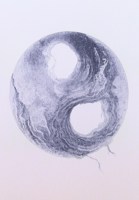
Why... a mushroom?
In an era of digital noise and emotional overload, we seek silence — and find it in a glass jar. This is not a pet in the conventional sense. It doesn't meow, doesn't ask to be walked, and leaves no fur on your trousers. It simply bubbles. Kombucha, a symbiosis of yeast and bacteria, becomes the ideal roommate for the weary city dweller: alive, yet silent; demanding only a drop of tea and a moment of attention. Why have we domesticated the process of fermentation? What does this say about our loneliness, our longing for the analog, and our search for connection without commitment? This text is a deep journey into the world of slow life, where a pet doesn't bark, but breathes carbon dioxide, and care becomes a meditation.
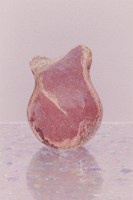
Imagine: you are offered the perfect steak. It looks flawless, smells appetizing, but it is made of soy. There is no history of a bull grazing on grass, not a drop of blood, not a single sinew. It is empty.
This is precisely what is happening today with works generated by artificial intelligence. They are sleek, striking, but behind them there is no soul, no life, no accidental sun flare in the frame. These are “soy creations” — simulacra that never had a singular original.
And so we stand on the threshold of a new world. A world where:
A documentary can be shot without leaving home.
A stuntman no longer risks his life for the perfect stunt.
Any fantasy can be realized by a single team.
Sounds like utopia? But there is a price to pay. Our reality will begin to feel nauseated by this perfect, yet tasteless, digital food. ...Or will it?
The reflections are presented within.